News
Savoring the Landscape: Wild Plants, Vineyards, and Pork Take Center Stage on the Second Day of Terrae Gran Canaria
The 4th International Rural Gastronomy Festival heads up to the island’s highest vineyard and winds its way back down while teaching participants how to use archaeophytes in cooking
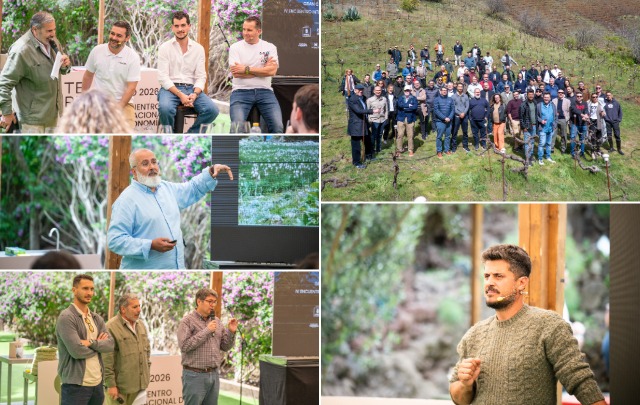
Terrae Gran Canaria, the 4th International Rural Gastronomy Conference, has traveled to the mountain town of San Mateo to visit one of the highest vineyards on the island and in Spain. At an altitude of 1,400 meters, winemaker Carmelo Peña and his team are restoring an old vineyard of Listán Negro grapes with the aim of bottling (a small production of less than 20,000 bottles per year) wines that capture the character and unique nuances of the land. Old vines, native varieties, and slopes so steep that the grapes must be hauled up in small wheelbarrows on rails, as there is no other way to transport the load. The wine collection is called Bien de Altura, and the more than 50 rural chefs gathered at the conference—hailing from all regions of Spain, Andorra, Italy, and Portugal—were able to taste them alongside a traditional sandwich of pork leg, white cheese, and pork rinds on sesame bread. It wasn’t all about debating the future of the countryside and small towns.
But the countryside was indeed present, in an original way, because the organizers asked the herbalist and expert in wild plants (and advisor to numerous rural and urban restaurants in Spain) Juan Carlos Roldán to speak about the possibilities of cooking with wild plants from Gran Canaria. Roldán had previously gathered plants while traveling through San Mateo and Santa Brígida, and in his talk, “The Memory of Plants,” he demonstrated how “naturalized wild species preserve the memory of the peoples and cultures that introduced them to that environment.” He also discussed how these plants, now forgotten and unknown to many, can enrich and diversify the offerings of local restaurants in each area, as well as tell a story. As a result of his impromptu foraging, Roldán showed the audience some 20–25 edible plants, all of which are easy to find in Gran Canaria, ranging from sumac to collejas, various legumes, and fern shoots that, he said, can be eaten just like asparagus.
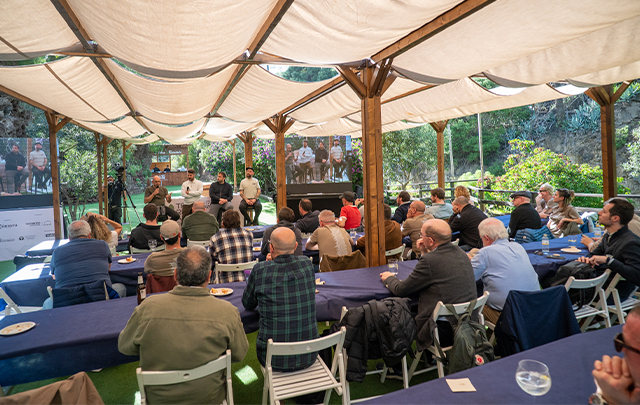
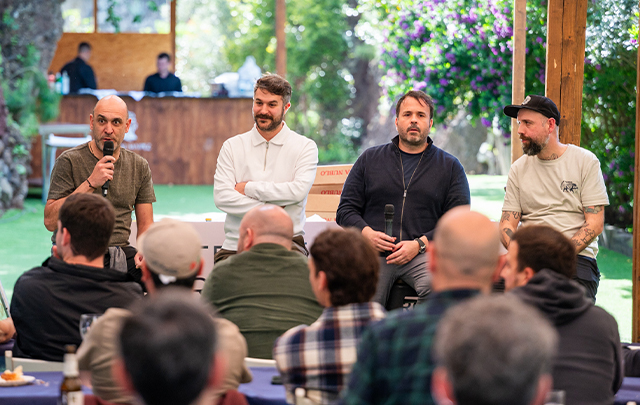
In the presentation “Three Ways of Understanding Pork,” Luis Duque (Casa Duque, Segovia), Alejandro Hernández (Versátil*, Zarza de Granadilla, Extremadura), and Airam Vega (Restaurante Vega, Ingenio, Gran Canaria) explained the importance of this animal in their respective kitchens. “Pork is not a product: it is a way of understanding place, time, and utilization,” proclaimed Alejandro Hernández. The chef from Extremadura explained the Versátil project, through which they aim to “cook the territory with respect, technique, and commitment.” He also discussed the research he is conducting on the aging of fresh Iberian pork, which has shown that the melting fat acquires greater aromatic intensity and the meat develops greater tenderness, along with nuances of meat and the wild.
Luis Duque explained that in the Segovia region, breeds and sows are selected to improve the quality of the meat. Duque, who runs a family-owned rotisserie that has been in operation for several generations, prepares a large number of suckling pigs daily. He explained that for the Segovian-style roast, the preparation involves cutting up the already cleaned suckling pigs for the various roasts; due to their quality, they are seasoned only with a little salt and placed in the oven, where a small amount of water is added to provide moisture.
Airam Vega, from the Vega restaurant, spoke about the Canarian black pig, which he said had special organoleptic characteristics due primarily to the environment in which they are raised.
Traditional Gran Canarian cuisine once again took center stage, with a lunch hosted by several restaurants on the island (Enoteca el Zarcillo in Las Palmas, Sabor Restaurant in Ingenio, Tasca Camino el Jamonal in Las Palmas, and Catedral Bistró in Arucas), a cheese platter (one of the island’s gastronomic gems, boasting the greatest diversity and variety of types), and a presentation on traditional sweets by the bakeries Pulido (Vega de San Mateo) and Nublo (Tejeda). In the evening, at the closing dinner, the island chefs Alejandro Hernández and Dana Joher, a young pastry talent working at the Ingenio bakery, joined the lineup of chefs alongside Luis Duque and Alejandro Hernández.
Related news
News
At Terrae, rural chefs are calling for a voice of their own and greater institutional support to sustain the region
The movement that emerged around the 4th International Rural Cuisine Conference reinforced its call in Gran Canaria for unity, the protection of small-scale producers, and the streamlining of bureaucracy
News
At Terrae, rural chefs are proposing partnerships with producers and colleagues from neighboring countries to raise their profile
The 4th Terrae Gran Canaria International Rural Cuisine Festival concludes with the aim of fostering a movement for rural gastronomy
News
Terrae Gran Canaria proposes creativity and commitment as key to revitalizing rural areas through gastronomy
The 4th International Conference on Rural Gastronomy brings together more than 50 rural chefs from Spain, Italy, Portugal, and Andorra in Gran Canaria
News
The popular food festival in Santa Brígida was a huge success
The public event ran out of its more than 6.000 samples and drew a large crowd to Villa de Santa Brígida Municipal Park
News
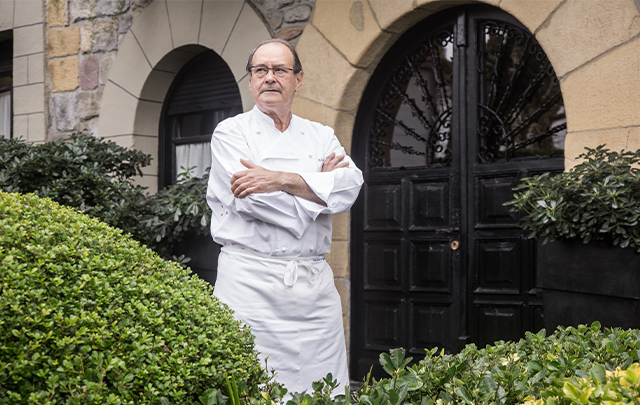
Hilario Arbelaitz to Receive the 2026 Terrae Award
News
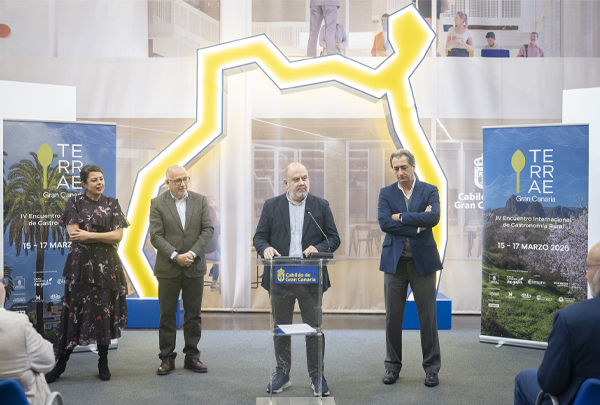
More than 50 rural chefs will gather in Gran Canaria from March 15 to 17 for the fourth edition of Terrae
News
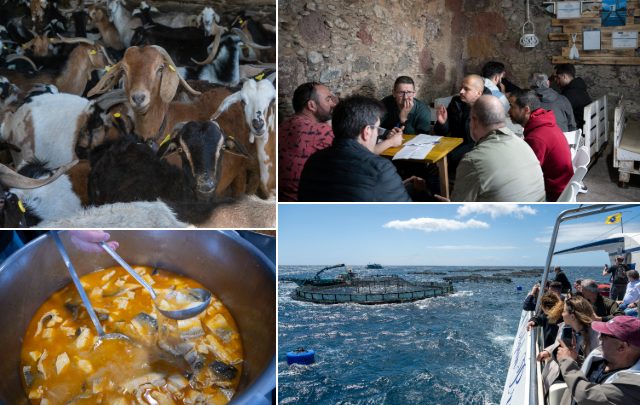
Agüimes Declaration: a commitment to the future of rural cuisine
The more than 50 rural chefs participating in Terrae 2025 have drawn up a document in which they declare rural cuisine to be a cultural heritage and commit themselves to preserving and promoting it.
News
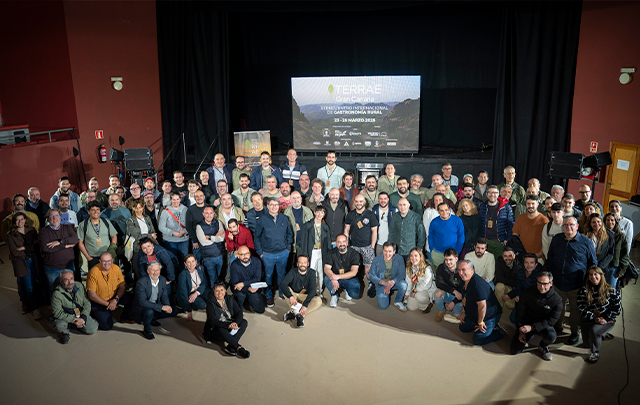
"The soul of cooking is in the villages"
Ignacio Echapresto calls for 'the luxury of immediacy', while Leonor Espinosa calls for a commitment to the rural environment.
News
The challenge is to create a differentiated product
News