News
At Terrae, rural chefs are calling for a voice of their own and greater institutional support to sustain the region
The movement that emerged around the 4th International Rural Cuisine Conference reinforced its call in Gran Canaria for unity, the protection of small-scale producers, and the streamlining of bureaucracy
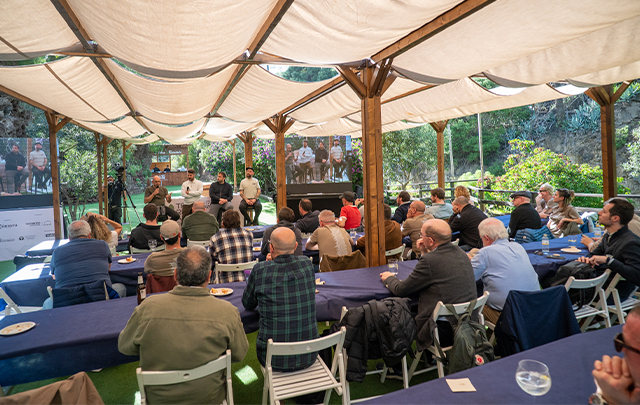
Terrae, the 4th International Rural Cuisine Conference held in Gran Canaria, once again served as a forum for reflection and advocacy for rural chefs, who argued for the need to maintain a shared network, expand their influence, and call for greater government involvement in protecting the local landscape, traditional trades, and local production.
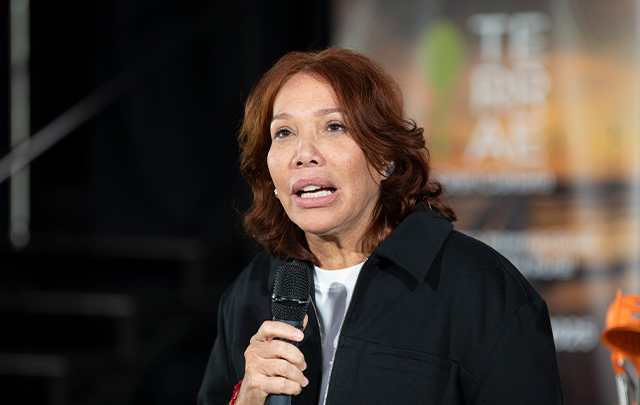
The event’s final session brought together more than 50 rural chefs for a joint dialogue. The first to speak was Luis Alberto Lera (Restaurante Lera*, Castroverde de Campos, Zamora), elected “mayor” of rural chefs two years ago, who highlighted the consolidation, over the course of the four editions of the gathering, of a genuine “rural cuisine movement.” Lera thanked the Ministry of Agriculture for the support and closeness shown by José Miguel Herrero, Director General of Food, for his attention to the world of rural gastronomy, and for awarding the group of rural chefs the Extraordinary Alimentos de España 2025 prize.
For his part, José Miguel Herrero encouraged the chefs to continue working as a community and to keep promoting the involvement of government agencies. Along the same lines, Lera recalled that in the three previous editions, a list of demands and needs for rural cuisine had already been drawn up, but he emphasized that the main challenge is not only to reach concrete agreements but to prevent the collective momentum from fading. “The important thing is to keep moving forward and ensure the movement doesn’t die out, that this sense of unity doesn’t stop, and that we continue to weave this network,” he argued.
Juan Carlos García (Vandelvira*, Baeza, Jaén), speaking as a “council member” for rural chefs, also insisted that, despite the progress made by the congress over the past four years, the structural problems remain the same. He acknowledged that institutions have listened to some of their demands, but warned that the sector cannot give up its autonomy or its identity. “We must each exercise our defiance in our own homes by doing what we feel inside. Let no list, no guide, no journalist, or anyone else tell us how we should be,” he stated.
One of the most repeated messages during the meeting was the value of the community created around Terrae. Nacho Solana (Restaurante Solana*, La Bien Aparecida, Cantabria) argued that, since the 2019 gathering in Zafra, the main progress has been precisely the bonding among chefs from different regions. “We have a common voice, and I believe this is a movement that can grow,” he noted. Edorta Lamo (Arrea!*, Campezo, Vizcaya) elaborated on this idea by emphasizing that the sector has achieved “the most difficult part,” which was coming together, forging bonds, and sharing a common rural sensibility.
In her view, this unity must also serve to defend small-scale producers and to convey a more complex and realistic vision of the rural environment to the urban world. In his remarks, Lamo raised issues such as hunting and its role in the ecological and food balance of certain regions. He called for greater social understanding of this reality and advocated for the creation of game meat centers in each region to make use of a resource that, in many cases, ends up being discarded despite its gastronomic and natural value.
The meeting also emphasized the need to expand the movement beyond the kitchen. Solana proposed strengthening ties with chefs from Italy, Portugal, and Andorra, and called for opening this space to artisans, producers, foragers, bakers, and pastry chefs. In his view, one of the major problems in rural areas is the disappearance of trades due to a lack of generational succession, which is why he considered it essential to also give visibility to those who sustain the food chain from its source.
Among the main practical demands, the contribution of Borja Marrero (Muxgo*, Las Palmas de Gran Canaria) stood out; he called for simplifying the bureaucracy that currently “limits and hinders” those who raise animals, grow crops, or make cheese, and proposed standardizing categories and procedures to facilitate the work of small-scale producers. Throughout the meeting, held at the Hotel Maipez, shared challenges from different regions emerged. Joan Capilla (L’Algadir del Delta, Poble Nou del Delta, Amposta, Tarragona) proposed the creation of a Ministry of Gastronomy, arguing that the interests of this sector have little in common with those of large food companies. Pedro Martino (Restaurante Pedro Martino, Caces, Asturias) called for more support for “invisible” producers and greater visibility for rural issues. Ramón Aso (Callizo*, Aínsa, Huesca) denounced the lack of essential services in many depopulated areas, while Kiko Moya (L’Escaleta**, Cocentaina, Alicante) lamented that chefs are called upon to represent their regions without their actual needs being addressed.
From Castilla-La Mancha, Fran Martínez (Maralba**, Almansa, Albacete) summed up the symbolic and emotional value of the gathering by stating that Terrae “gives energy” and allows rural chefs to listen to one another, regardless of stars or hierarchies.
The international dimension of the event reinforced the idea that rural issues transcend borders. Vítor Adão (Plano, Lisbon, Portugal) explained that in Portugal there are similar limitations in areas such as river fishing or hunting, and he defended the need for their own representatives, since traditional hospitality associations do not express the specific needs of rural chefs. Giuseppe Iannotti (Krèsios**, Telese Terme, Campania, Italy) also expressed his dissatisfaction with regulations that, he claimed, sometimes force him to do without products deeply rooted in the local territory. In response, he argued that the industry may leave, but those who cook in the villages, the mountains, or by the sea are an inseparable part of that landscape and that identity.
The Terrae assembly thus painted a clear picture: rural cuisine recognizes itself as a community, shares a common diagnosis regarding bureaucracy, lack of representation, the invisibility of producers, and a shortage of services in these regions, and aims to continue gaining a foothold in the public sphere without losing its distinct identity. Rather than finalizing a list of demands, the gathering reaffirmed that the primary goal, for now, is to ensure the movement does not come to a halt.
Related news
News
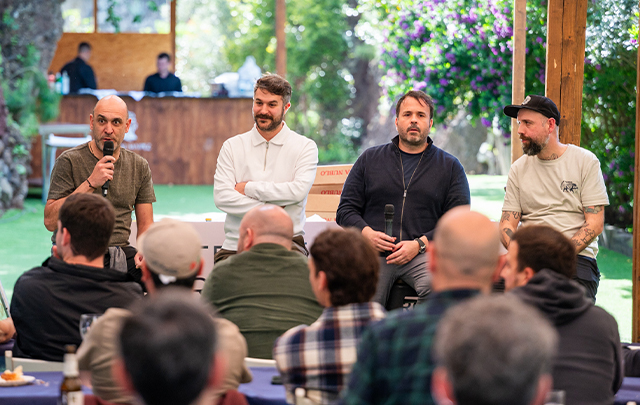
At Terrae, rural chefs are proposing partnerships with producers and colleagues from neighboring countries to raise their profile
The 4th Terrae Gran Canaria International Rural Cuisine Festival concludes with the aim of fostering a movement for rural gastronomy
News
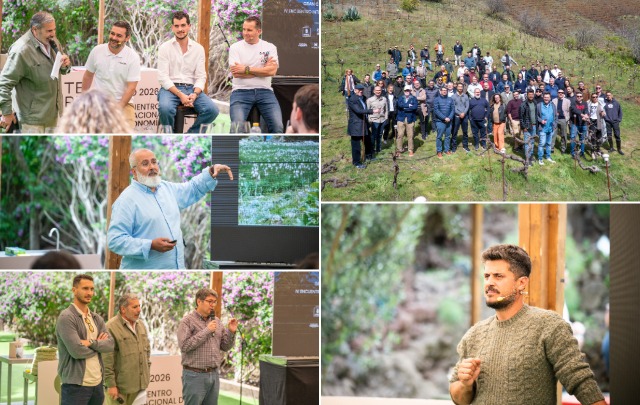
Savoring the Landscape: Wild Plants, Vineyards, and Pork Take Center Stage on the Second Day of Terrae Gran Canaria
The 4th International Rural Gastronomy Festival heads up to the island’s highest vineyard and winds its way back down while teaching participants how to use archaeophytes in cooking
News
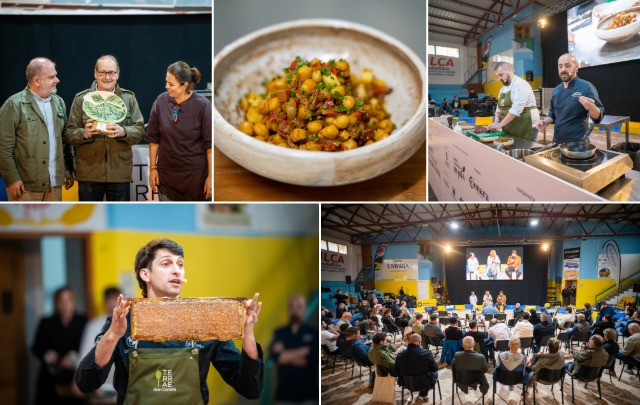
Terrae Gran Canaria proposes creativity and commitment as key to revitalizing rural areas through gastronomy
The 4th International Conference on Rural Gastronomy brings together more than 50 rural chefs from Spain, Italy, Portugal, and Andorra in Gran Canaria
News
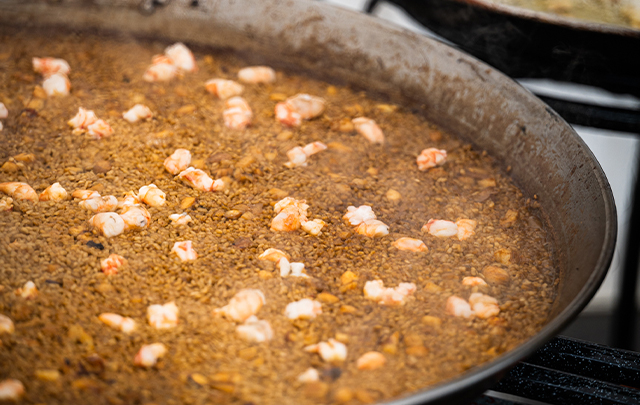
The popular food festival in Santa Brígida was a huge success
The public event ran out of its more than 6.000 samples and drew a large crowd to Villa de Santa Brígida Municipal Park
News
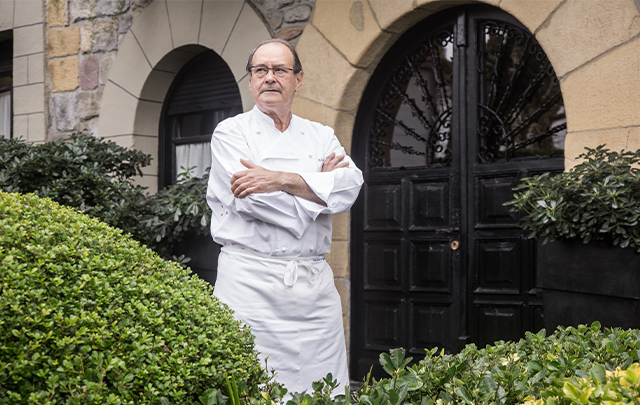
Hilario Arbelaitz to Receive the 2026 Terrae Award
News
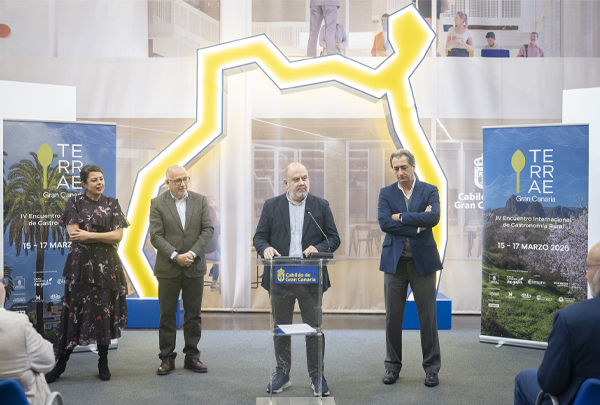
More than 50 rural chefs will gather in Gran Canaria from March 15 to 17 for the fourth edition of Terrae
News
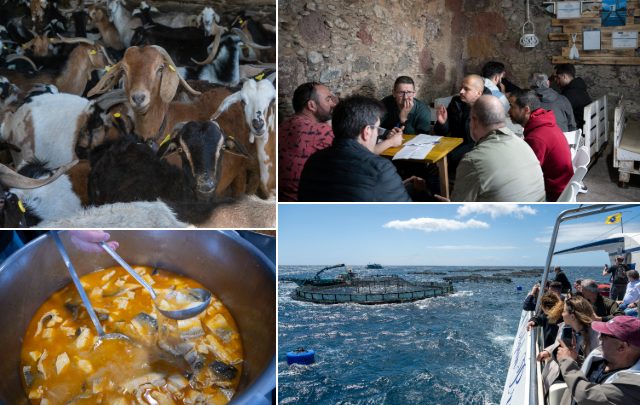
Agüimes Declaration: a commitment to the future of rural cuisine
The more than 50 rural chefs participating in Terrae 2025 have drawn up a document in which they declare rural cuisine to be a cultural heritage and commit themselves to preserving and promoting it.
News
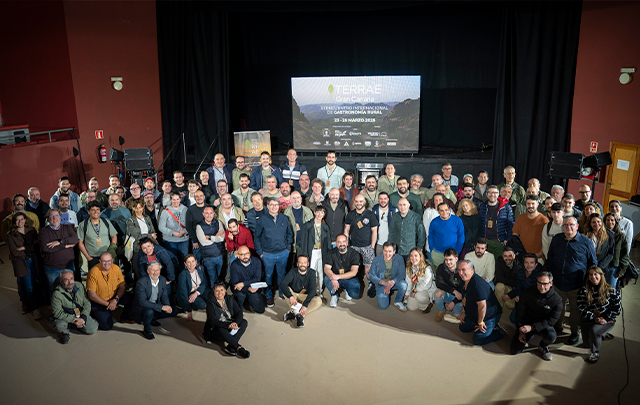
"The soul of cooking is in the villages"
Ignacio Echapresto calls for 'the luxury of immediacy', while Leonor Espinosa calls for a commitment to the rural environment.
News
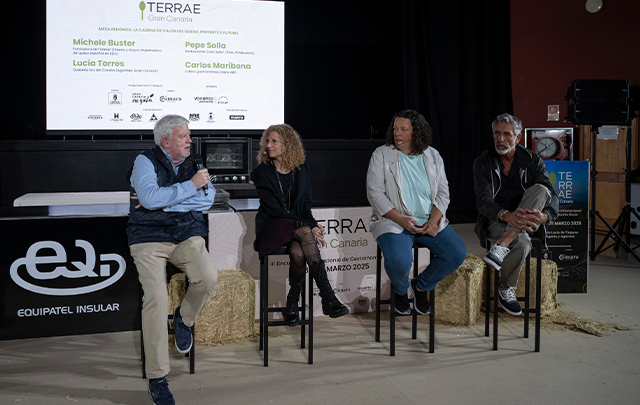
The challenge is to create a differentiated product
News